
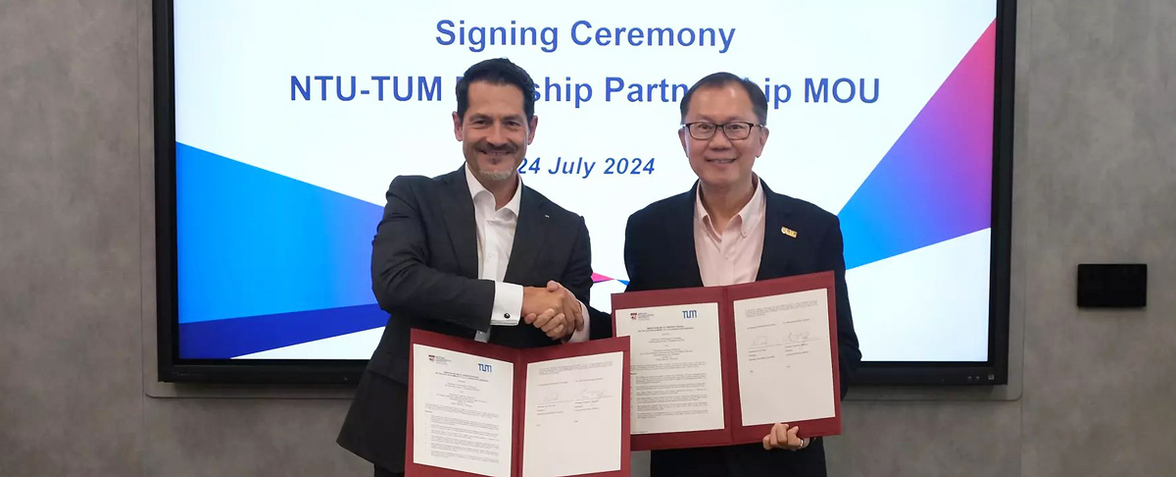
TUM President Prof. Thomas F. Hofmann (left) and NTU President Prof. Ho Teck Hua agree on the flagship partnership in Singapore. Image: NTU Singapore
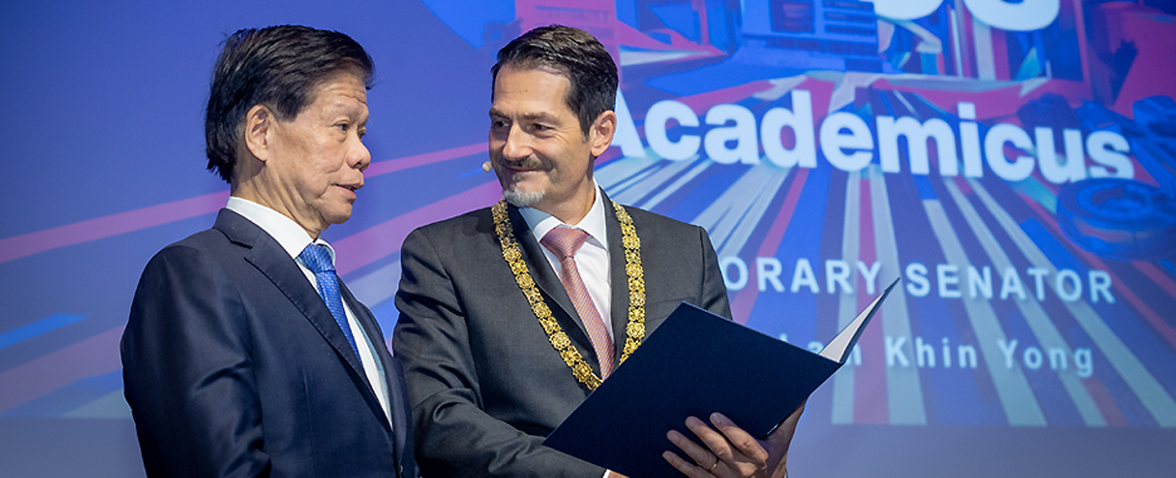
At the Dies Academicus 2024, Prof. Lam Khin Yong, Vice President (Industry) of NTU, receives the honorary senatorship from TUM President Thomas F. Hofmann. Image: Andreas Heddergott / TUM
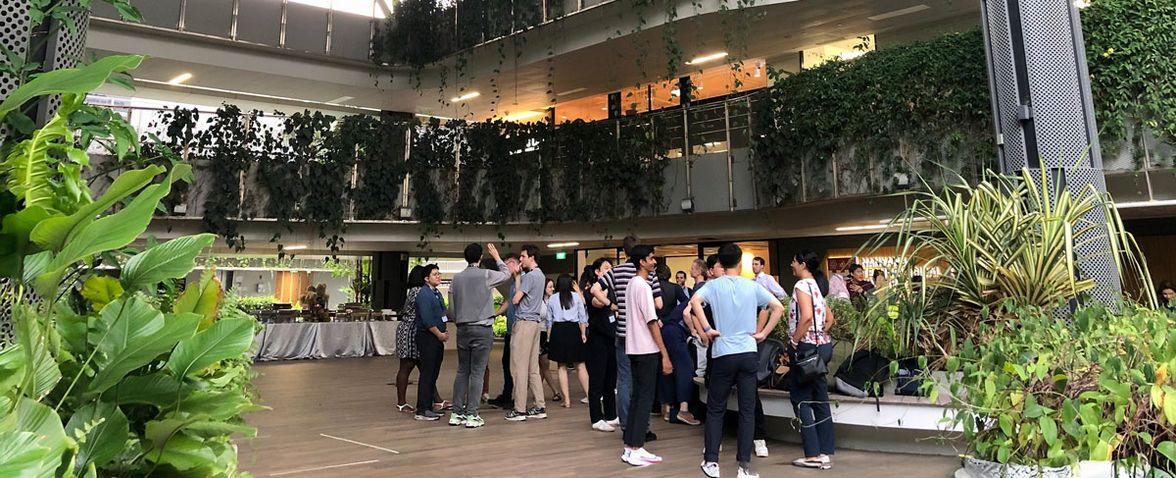
In 2023, the Global Fellows Program took place for the first time at NTU in Singapore. Image: TUM-GS
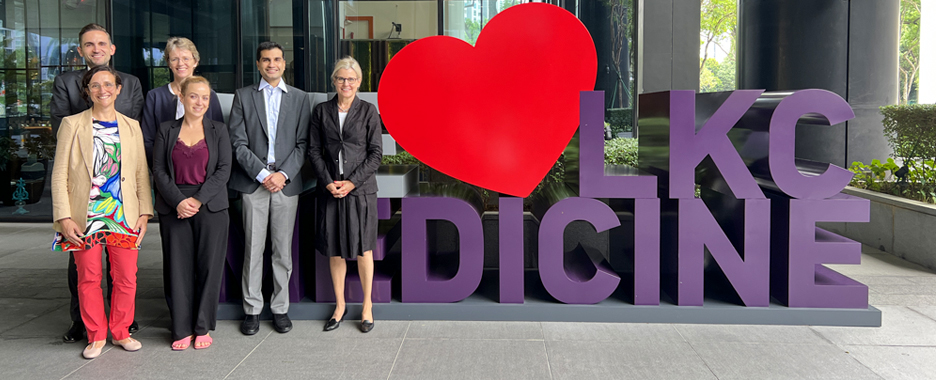
A TUM delegation visits the Lee Kong Chian School of Medicine at NTU Singapore: Prof. Yusuf Ali, NTU LKCMedicine Vice Dean International Relations (5th left), Prof. Juliane Winkelmann, TUM Executive Vice President for International Alliances and Alumni (6th left). Image: NTU LKCMedicine
The Technical University of Munich and Nanyang Technological University (NTU) in Singapore are linked by a forward-looking flagship partnership. Together, the two universities are expanding student and doctoral exchange and preparing joint study programs, while pooling their research strengths in key areas such as quantum technologies, sustainable agriculture, medicine, additive manufacturing, materials science, and the application of AI in science.
The foundation for this flagship partnership was laid as early as 1997, when TUM and NTU signed their first cooperation agreement. Since then, the two universities have built a close relationship through joint study programs with TUM Asia and numerous successful research initiatives with TUMCREATE. With the flagship partnership officially signed in July 2024, TUM and NTU aim to further strengthen their long-standing collaboration and expand it across disciplines.
Visit from Singapore: The TUM Incubator as a hub for international entrepreneurial spirit
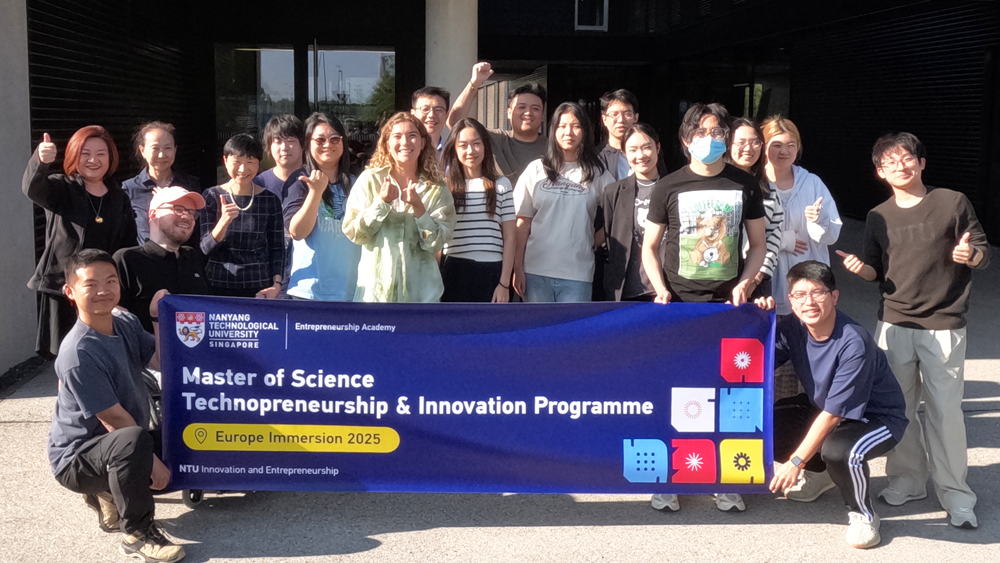
In June 2025, a group of 14 master’s students from Nanyang Technological University (NTU) in Singapore visited the TUM Incubator in Garching. The focus of the visit was on exchanging ideas about entrepreneurship, technology transfer, and innovation within Munich’s start-up ecosystem.
The participants gained valuable insights into the wide range of entrepreneurial initiatives at TUM – from TUM Entrepreneurship and UnternehmerTUM to the TUM Venture Labs. They not only learned about the innovation environment but also experienced it firsthand – through visits to the MakerSpace and conversations with founders and professionals from the start-up community.
The visit not only helped to further develop entrepreneurial thinking but also opened up new perspectives for international exchange – reflecting the strong collaboration between TUM and NTU.
The Global Fellows Program, launched in 2017 by TUM Graduate School and Imperial College, offers 40-50 doctoral candidates from all disciplines the opportunity to develop their research and collaboration skills within an international context as part of a five-day summer school.
In 2021, NTU was welcomed as a new partner, expanding the bilateral program between Imperial College London and TUM into a trilateral initiative.
Previous topics and host locations:
- 2025: Multidisciplinary solutions for climate-responsive societies (TUM Campus Munich)
- 2024: Data-driven innovations for zero pollution mobility (Imperial College London, South Kensington)
- 2023: Data for sustainability (NTU, Singapore)
- 2022: The role of robotics in well-being and the workplace (TUM Campus Garching)
- 2021: Health data and technology for society (Online)
The collaboration with NTU has also flourished in research. In 2010, TUMCREATE was establischd to advance TUM's research initiatives in Singapore. As part of the Campus for Research Excellence and Technological Enterprise (CREATE), funded by the National Research Foundation (NRF), TUMCREATE benefits from Singapore's research funding and collaborates closely with local and international institutions. NTU plays a pivotal role for the joint research.
Together with NTU, TUM and TUMCREATE developed multi-faceted research projects spanning topics from urban mobility, food science to solutions for a carbon-neutral megacity.
Ongoing joint research projects between TUM and NTU:
- Proteins4Singapore: Combining the cultivation of alternative protein sources with innovative processing and extraction methods, and reverse engineering for sustainable urban food production
- AquaCycle: Developing proteins with high nutritional and sensorial quality from by-products of fishery and aquaculture
- Singapore’s Pathway to Carbon Neutrality: Forecasting Singapore’s future energy demand with the inclusion of new technologies and analysis of renewable potential
- CellFACE: Imaging-based flow cytometry for hidden hematology biomarkers
- QUASAR: Addressing the cybersecurity challenges posed by advancements in quantum technologies (also in collaboration with Fraunhofer Singapore and NUS)
As the first overseas campus of a German university, TUM Asia in Singapore broke new ground in 2005 by launching a joint Master’s degree in Integrated Circuit Design with NTU. In 2007, the collaboration expanded with the introduction of the Master program in Microelectronics, which was restructured in 2015 to meet evolving industry demands. The revised program, now in Green Electronics, features an updated curriculum with a strong focus on sustainable integrated circuits and microelectronics.
To this day, TUM professors continue the tradition of delivering lectures to students in Singapore. Graduates of the program are awarded a prestigious joint Master’s degree from TUM and NTU.
In July 2024, TUM President Professor Thomas F. Hofmann and NTU President Prof. Ho Teck Hua officially signed the TUM-NTU flagship partnership. The partnership focuses on future-oriented topics such as quantum technologies, sustainable agriculture, medicine, additive manufacturing, materials science, and the application of AI in science.
In addition to research and teaching, overarching institutional topics such as career development, entrepreneurship, and best practices in university management play an important role. The partnership aims to further strengthen cooperation between the two universities at all levels.
Students and doctoral candidates
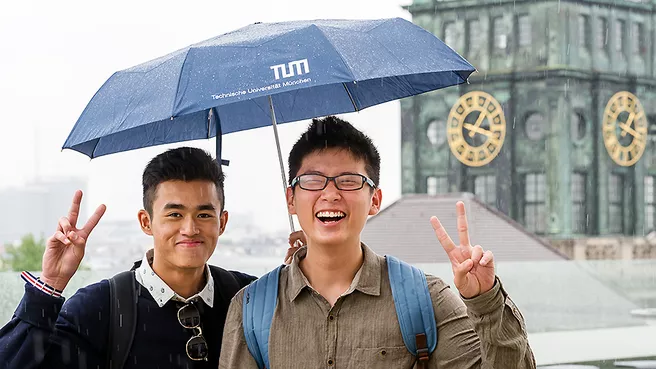
As part of the TUMexchange program, TUM students can study at NTU and NTU students can study at TUM. Doctoral candidates benefit from the TUM-NTU Joint Supervision Program, which enables them to spend at least 12 months conducting research at the partner university.
Funding initiatives for researchers
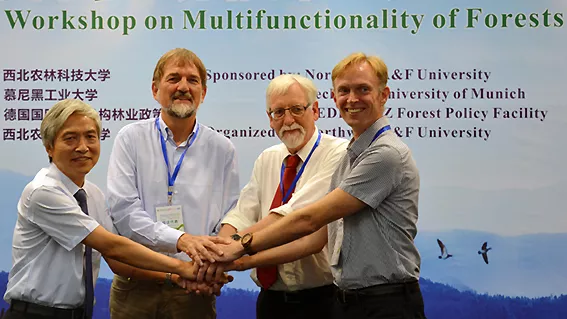
To support new projects with Nanyang Technological University, scientists of TUM can apply for funding from the TUM Global Incentive Fund. Within the framework of the TUM Global Visiting Professor Program, it is also possible to invite scientists from NTU to TUM for joint research.
Global Fellows Program
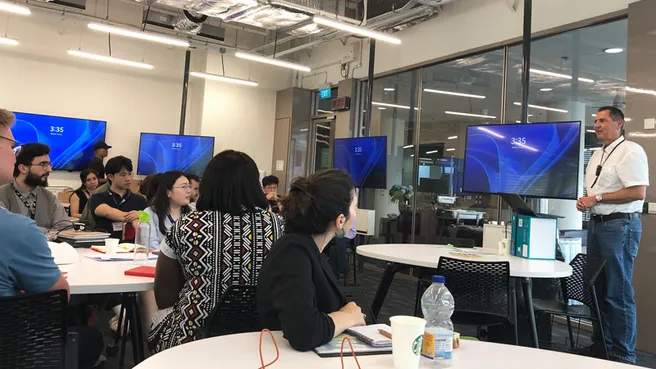
Through the Global Fellows Program, around 40 doctoral candidates from TUM, Imperial College, and NTU collaborate annually in a summer school. They strengthen their intercultural skills to effectively and creatively advance joint research ideas of the partners.